True Cost
What you paid is the first line. Acquisition, prep, and grading are the rest of it.
The Card Business Playbooks
The hobby has no shortage of advice about what to buy, what to grade, and what might go up next.
Card Business Playbooks is about the business underneath the cards: what a card really costs, what a sale really makes, and whether the thing you built can last.
The launch date, early-access pricing, and new sections as they publish.
The problem
This industry has real talent in it. Dealers who read a collection in thirty seconds. Shop owners who know who will buy a card before the customer does. What almost nobody was handed is a plain way to see the economics underneath that expertise.
What that looks like
Revenue tells you how much money passed through the business. It doesn’t tell you how much stayed.
Coming Fall 2026
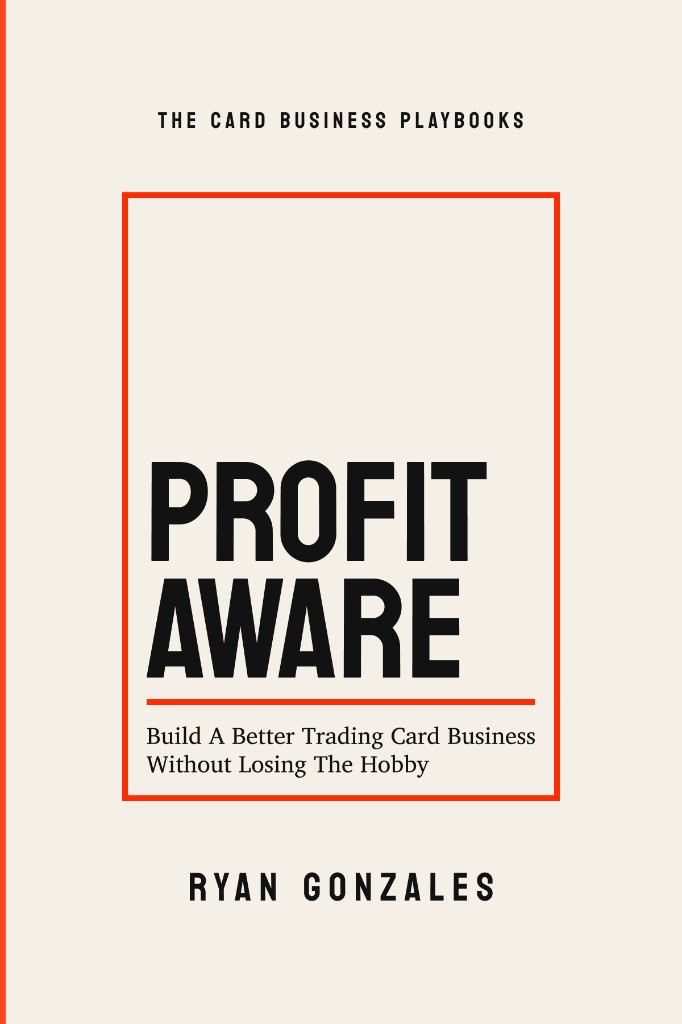
Build a Better Trading Card Business Without Losing the Hobby
For the collector, vendor, online seller, or shop owner who wants more than a stack of sales receipts.
True Cost. Net Proceeds. Contribution. Buying, inventory, workflow, channels, and growth, in the terms a card business actually uses.
Inside the playbook
What you paid is the first line. Acquisition, prep, and grading are the rest of it.
Sale price is vanity. Contribution is what a transaction gave the business to work with.
Cost, Channel, Time, Labor, Risk, Expected Profit. Six questions before you say yes.
What a business pays because too much of the work still requires the owner.
Every card on the shelf is money you deployed and have not got back yet.
Work should scale with the economic consequence of getting it wrong.
The channel should earn the card. Reach is something you buy, not something you owe.
Scale does not fix the business. Scale reveals it.
Free tools
Eight worksheets and calculators. They run on the page. No email, no download.
The companion worksheet from the book. Write down where your business stands before you start moving things around.
Cost, list price, age, and a next move for every row.
Sale price minus selling costs is Net Proceeds. Net Proceeds minus True Cost is Contribution.
Compare published seller fees on eBay, TCGplayer, and other card marketplaces.
Score age, concentration, sell-through, and cash exposure.
Five questions. See if you are selling, operating, managing, or scaling.
Find your starting point
You are selling enough that guessing is getting expensive.
→02Turn show weekends into a business you can read.
→03More listings demand better operating discipline.
→04A healthy shop is built one clear decision at a time.
→05Understand the business before you sign the lease.
→
Card Business Playbooks + Pulltrader
Card Business Playbooks is where the thinking gets published. Pulltrader is where it runs: inventory, cost basis, research, listings, and the decisions that change what you keep.
Explore PulltraderFrom the book
Six sections from Profit Aware, published in full.
Revenue tells you how much money passed through the business. It doesn’t tell you how much stayed.
A comp is evidence that a transaction happened. It is not a price tag on your copy.
The invoice is the first line of the cost. It is rarely more than two thirds of it.
The launch list
Early access, launch pricing, new sections as they publish, and the worksheets as they open.